

AI has quickly moved from being a buzzword to something most of us use every day. Not in a sci-fi sense, and not as a replacement for people, but as a tool to help get work done faster. Small and mid-sized businesses use AI to schedule meetings, write drafts, summarize documents, generate reports, answer support questions, and even help spot cyber threats.
There is real value here. But there are also real risks if AI tools are adopted without guardrails. The goal is to gain efficiency without handing your data to the wrong place or creating new security holes.
Let’s break this down in a way that makes sense for real organizations.
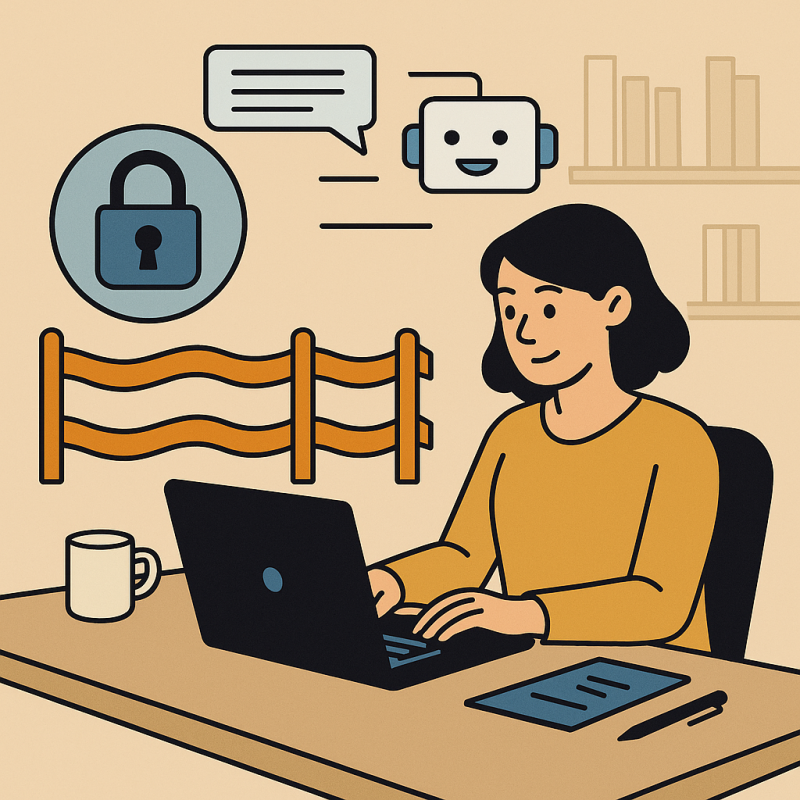
Where AI Helps
AI tools are now accessible to businesses of every size. They show up in places like:
-
Email and calendar scheduling
-
Customer service chat assistants
-
Sales and pipeline forecasting
-
Writing and document summarization
-
Invoice and document processing
-
Data analysis and reporting
-
Security monitoring and threat detection
In many cases, these tools cut repetitive tasks and reduce the chance of human error. They help teams work smarter. But they also introduce a new variable: where your data goes when you use them.
The Security Risks You Need to Understand
AI itself is not the problem. The problem is what data you feed into it and who controls the system behind it.
Data Leakage
AI tools learn from the data you give them. If you paste sensitive material into a public chatbot, you may be handing that data to a third party you cannot control. Some platforms store and reuse the data for training. That can expose client information or internal work product.
Shadow AI
If employees use AI tools on their own, without approval or oversight, you now have unsecured systems processing company data. That becomes a compliance and privacy issue very quickly.
Overreliance and “AI Must Be Right” Thinking
AI gets things wrong. Sometimes confidently wrong. If no one is checking the output, bad information can slip directly into reports, customer responses, or business decisions.
How to Use AI Safely
The solution is not to ban AI. The solution is to put boundaries in place so your business gets the benefit without the risk.
1. Establish an AI Use Policy
Define clearly:
-
Which AI tools are allowed
-
What kinds of data can and cannot be entered
-
When to ask for internal approval
-
How results should be reviewed before use
This avoids the “everyone does whatever they want” situation that leads to data loss.
2. Choose Business-Grade AI Platforms
Consumer AI tools are not built for privacy. Look for platforms that:
-
Meet standards like GDPR, HIPAA, or SOC2
-
Clarify that your data is not used for training
-
Support encryption in transit and at rest
-
Allow control of data retention
AI does not need to be “open” to be helpful.
3. Limit Who Can Access What
Use role-based access controls so only the right people and systems have access to the data needed for their job. Do not give AI tools access to everything by default.
4. Monitor Usage
Track:
-
Which tools are in use
-
What data is being processed
-
Whether unusual behavior occurs
You cannot secure what you cannot see.
AI for Cybersecurity
AI is not only a risk. It is also one of the strongest tools we have to defend against attacks. Modern security platforms use AI to:
-
Detect suspicious activity
-
Spot phishing patterns
-
Analyze endpoint behavior
-
Automate response actions
This is one of the few areas where AI can actually reduce workload while improving security.
The Human Factor Still Matters
Even the best tools fail if people use them carelessly. Employees should understand:
-
What data is safe to use with AI tools
-
How phishing and scams are now AI-generated too
-
That AI output must always be reviewed for accuracy
Good training prevents most security problems.
AI With Guardrails
AI can absolutely improve productivity and efficiency. The key is to use it intentionally, not casually. Set clear rules, use the right platforms, and review outputs. With the right guardrails, AI becomes a competitive advantage instead of a security liability.
If you want help building a safe AI usage policy or selecting business-grade tools, we can walk you through it in a way that fits your environment and your team.
Just reach out.